Wicked Mummy: Unlocking Playful Design
In a digital landscape saturated with sleek sans-serifs and rigid geometric forms, there is a growing hunger for designs that feel human, tactile, and distinctly joyful. This shift has brought a specific category of typography back into the spotlight: fonts that prioritize personality over conformity. Among these, Wicked Mummy stands out as a testament to the power of whimsy. It is not merely a typeface; it is a visual voice that speaks directly to the child in all of us, bridging the gap between professional design needs and the charm of hand-drawn illustration.
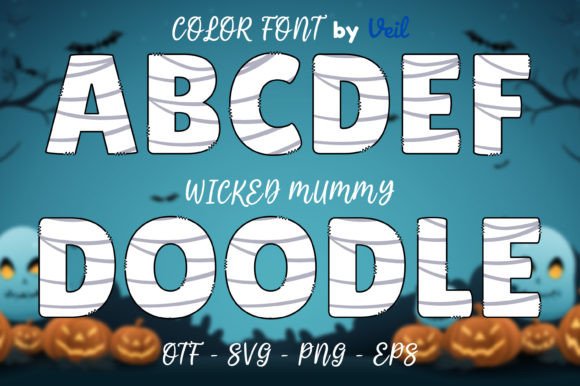
At its core, Wicked Mummy is a display font characterized by its irregular baselines, bouncy letterforms, and a texture that mimics the organic imperfection of a marker or crayon. It avoids the sterile perfection of vector paths, opting instead for a style that feels "drawn" rather than "typed." This makes it an incredibly effective creative font for projects that require an immediate emotional connection. When you look at Wicked Mummy, you don't just read a word; you sense a mood—one that is mischievous, friendly, and approachable.
The Visual DNA: Why It Works for Storytelling
The effectiveness of a premium font like Wicked Mummy lies in its visual hierarchy and rhythm. Unlike a standard serif font or sans serif font, which prioritizes legibility in long-form text, Wicked Mummy is designed to create impact. Its uneven kerning (the spacing between characters) creates a natural rhythm that guides the eye, making it perfect for headers, logos, and short bursts of text where personality is paramount.
This typeface excels in environments where "professional" doesn't have to mean "corporate." For instance, in packaging design for artisanal goods, Wicked Mummy can soften the barrier between the product and the consumer. It suggests that the brand is approachable and fun. Similarly, in editorial design, particularly for lifestyle magazines or children’s publications, it serves as a tool to break the monotony of standard body text, drawing readers into feature stories with an inviting, handwritten warmth.
Strategic Applications: From Branding to Digital Media
Choosing a typeface is a strategic decision that impacts brand identity. Wicked Mummy is particularly potent for brands targeting audiences that value authenticity and playfulness. It is a natural fit for the toy industry, educational apps, and family-oriented services. However, its utility extends beyond the obvious.
Consider the realm of social media graphics. In a fast-scrolling environment, text needs to grab attention instantly. A bold, textured font like Wicked Mummy creates thumb-stopping content. It works exceptionally well for overlaying text on images because its irregular shape allows it to interact with visual elements rather than just sitting on top of them. For web design, it serves as an excellent accent font for call-to-action buttons or hero section headlines, provided it is paired correctly.
The versatility of Wicked Mummy also shines in personal projects and the gig economy. For crafters and hobbyists creating invitations, greeting cards, or scrapbooks, this font eliminates the need for expensive hand-lettering services while retaining that bespoke look. It is a valuable design asset for logo design, particularly for bakeries, coffee shops, or boutique agencies that want to convey a "human" touch.
Mastering the Pairing: A Practical Guide
One of the most common mistakes with handwritten fonts or script fonts is overuse. Because Wicked Mummy has such a distinct personality, using it for an entire paragraph can lead to visual fatigue and poor readability. The golden rule with this typeface is restraint. Use it for the "loud" parts of your design—the headline, the main takeaway, or the logo—and let a cleaner font handle the heavy lifting.
When building a font pairing, contrast is your best friend. Because Wicked Mummy is organic and textured, it pairs beautifully with clean, geometric sans-serifs like Montserrat, Lato, or Open Sans. The clean lines of these fonts act as a visual resting place for the eyes, allowing the whimsy of Wicked Mummy to stand out without overwhelming the viewer. Avoid pairing it with other decorative fonts or overly complex serif fonts, as this will create a cluttered, confusing aesthetic.
Evaluating Project Fit and Licensing
Before integrating any commercial font into your workflow, a critical evaluation of the project context is necessary. Ask yourself: Does the brand voice require warmth and approachability, or does it demand authority and stability? Wicked Mummy is the answer to the former. It would likely be the wrong choice for a law firm or a fintech startup, but it is the perfect choice for a yoga studio, a pet groomer, or a indie game developer.
Furthermore, practical considerations regarding modern typography standards must be addressed. Always review the licensing terms of the font. Ensure that the license covers your intended use, whether it is for desktop publishing, web design (via webfont files), or merchandise (print-on-demand). A reputable premium font usually comes with clear documentation regarding these rights.
Finally, test the font in context. Create mockups to see how Wicked Mummy handles different sizes and colors. Check the readability of the numerals and special characters, as these are often where display fonts vary the most. By treating Wicked Mummy not just as a decoration but as a functional component of your visual language, you can leverage its unique charm to create designs that are not only beautiful but deeply engaging.